
 Dr Egg's
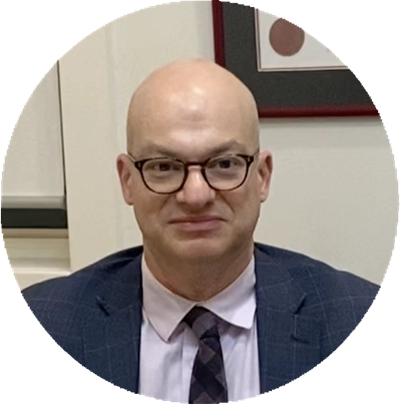
A/Prof Gary Galambos | TMS Plus

In our Dr Egg blog published on 1 November 2026 “Understanding OCD through Taming the Beast and Strengthening the Lion Tamer” , we introduced two five-minute short films explaining A/Prof Gary Galambos ’s approach to OCD. One explored responding differently to OCD’s compulsive urges through ERP; the other explained how behavioural activation draws on positive emotions linked to meaningful memories, places and activities to help depleted people re-engage with constructive life goals.
We now add a third companion film “ Becoming Your Own Lion Tamer” . It asks a question that matters after improvement: how do you carry what you have learned into everyday life, as clinic treatment becomes less frequent?
This is the next chapter in the same story. The aim is sustained remission and a life with more room for relationships, activities and choice. Here we revisit the foundations, then explain consolidation, continued practice and the supports that can remain available.
Read Part 1 — published 1 November 2026
Remembering why the beast keeps roaring

The lion represents OCD’s demanding alarm. It is a metaphor for a distressing process, not the person living with it.
A doubt, image, sensation or feeling of incompleteness can bring a strong urge to check, wash, repeat, seek reassurance or mentally review. Performing a compulsion may provide temporary relief, which can reinforce the same response next time.
Recognising this pattern helps us understand why relief in the moment and progress over time can pull in different directions. Treatment gives you opportunities to practise another response, with support and without blame. The purpose is to change your relationship with the alarm, rather than spend your life trying to suppress every thought.
Continuing to practise a different response

Exposure and response prevention, or ERP, involves approaching agreed triggers while practising without the compulsions used to neutralise distress. A short delay can help someone begin. Over time, the work is to reduce and resist rituals, rather than always perform them once the delay ends. [1]
That includes less visible responses such as mental checking and repeated reassurance seeking. Practice is planned collaboratively and begins at a manageable level.
The skill remains useful after a course finishes. You may still experience doubt or discomfort. You can practise making a chosen response while those feelings are present, without requiring perfect calm before continuing your day.
Watch Taming the Beast — narrated by A/Prof Gary Galambos
Supporting the person doing the work

Strengthening the Lion Tamer explored what happens when the person doing this work feels depleted. Repeated rituals, avoidance and rumination may be accompanied by low mood, poor sleep, demoralisation or withdrawal from ordinary life.
‘Shutdown’ can describe how that feels. Assessment still needs to explore the individual reasons for exhaustion, including depression and physical health difficulties. Feeling depleted is not evidence that someone has failed to try.
These needs remain relevant during consolidation. If your mood or energy changes as appointments become less frequent, bring it into the review. We consider your ability to participate and function alongside the OCD symptoms themselves.
Watch Strengthening the Lion Tamer
Keeping the three strands working together

The framework brings together ERP, behavioural and emotional activation, and reflection. ERP addresses the obsession–compulsion cycle. Activation supports participation in meaningful activity. Reflection and psychoeducation help you understand patterns, review progress and choose your next steps.
The ‘rational’, ‘emotional’ and ‘wise mind’ language offers ways of thinking about overlapping capacities. Each treatment draws on more than one capacity; these are not separate brain compartments.
During Act 3, these strands continue to support one another. You practise without rituals, return to worthwhile activities and reflect on what helps. The framework organises care without implying that every component has the same evidence base.
Returning to your meaningful destination

What would you like to do with the time and attention OCD has occupied?
MindSkiller eLearning’s In Search of Your Life Goals exercise explores the Valley of Values, the House of Healthy Relationships and the Garden of Activities. These are prompts for identifying directions that matter to you, rather than an examination you must complete perfectly.
In consolidation, we return to those ideas and ask what is happening in daily life. Perhaps you have contacted a friend, resumed a hobby or returned to part of your studies. A small action taken with uncertainty present can matter. Participation gives treatment a meaningful direction beyond measuring symptoms.
Choosing a pathway around your needs

The three short films form a narrative, while the clinical sequence is personalised. Someone whose main barrier is depression or exhaustion may need targeted support for those difficulties. Someone whose compulsions are the immediate priority may begin more directly with ERP and other indicated OCD treatment.
Activation, education and exposure can overlap. You do not have to become perfectly motivated before ERP is possible.
The same flexibility applies after improvement. We review symptoms, functioning, preferences and previous responses before deciding what to continue, space out or change. An individual treatment plan should remain responsive to what is happening in your life.
Keeping care connected as needs change

These principles inform Gary’s work across the multidisciplinary Uspace OCD Program at St Vincent’s Private Hospital Sydney and the TMS Plus – VisionTMS outpatient model. Uspace’s specialist program was developed with Professor Vlasios (Bill) Brakoulias and includes ERP, psychiatric care and family education. [2]
The wider ecosystem connects psychiatric treatment planning with radiology-based TMS delivery and neurology-informed expertise. MindSkiller supports education and continuity. Each contribution is selected according to the person’s needs.
Medication remains part of the integrated plan, with its own prescribing review. Reducing clinic-based sessions does not automatically mean reducing an effective SSRI or another prescribed treatment. Any changes are agreed with the prescriber.
Act 3 Becoming Your Own Lion Tamer

The new film moves beyond the clinic doors. Its focus is consolidation: using your skills in a world that is less predictable than a scheduled treatment session.
At first, the team may provide considerable structure, coaching and encouragement. As you improve, we can explore whether less intensive support gives you more opportunity to direct your own practice. This is a supported transition, with review and a way to seek help.
Agency includes making decisions about care and recognising when assistance is useful. It does not depend on completing a course without further support. Ongoing therapy, maintenance or a booster may remain appropriate.
WATCH VIDEO: Becoming Your Own Lion Tamer
Taking the rehearsal into everyday life

A personalised immersive exposure video can be understood as a simulation of relevant OCD triggers. It recreates selected situations and cues so you can rehearse responding without rituals. ERP also includes practice with real situations and imaginal exercises.
What matters is how you respond during and after the scene. The aim is to take that learning into your kitchen, workplace, studies and relationships. For example, an agreed exercise may involve leaving a completed task without another check.
TMS, AR glasses and selected sensory cues may be included in clinic treatment where appropriate. The specific benefits of combining these components require evaluation. The skills also need opportunities to be practised beyond the equipment and familiar setting.
Spacing clinic sessions with regular review

For someone who has improved sufficiently, Act 3 may involve a gradual reduction in clinic-delivered TMS Plus sessions, including the associated personalised immersive exposure work and coaching.
One illustrative plan is three sessions per week for two weeks, then two per week for two weeks, then one per week for two weeks. Some people may have two further weekly sessions before another review. Others need a different pace or longer maintenance.
This is an example of Gary’s individualised clinical approach, not a proven universal OCD relapse-prevention schedule. We assess what happens between visits and adjust. Medication and any separate depression treatment follow their own clinical plans; they do not end automatically with this schedule.
Fewer appointments and continuing everyday practice

As clinic time reduces, ordinary life offers more opportunities to use the skills. Planned ERP and appropriate everyday practice continue between appointments, at a level agreed with your clinician.
You might resist an extra reassurance question, leave something feeling imperfect or return to an activity without completing a mental review first. The point is to practise flexibly across situations, rather than rely on one room, one video or one person being present.
Families can help by supporting the agreed plan and encouraging participation without becoming a repeated source of certainty. Follow-up remains available. Less intensive treatment should be accompanied by clear arrangements for review and support.
Noticing changes and knowing what to do

A difficult day or brief return to an old response does not erase your progress. A lapse can be a prompt to return to useful skills. Persistent worsening that interferes with daily life deserves early clinical review. [3]
Agree on warning signs that fit your own pattern: rituals taking longer, reassurance increasing, avoidance expanding, mood deteriorating or valued activities falling away. Review these at sensible intervals, so monitoring does not become another compulsion.
Your written plan should identify the skills to practise, people who can support you and how to contact the team. You do not need to decide perfectly whether something is a “relapse” before asking for help. Seek urgent clinical assistance for rapid deterioration or concerns about your safety.
Keeping your therapeutic videos in reach

We encourage patients to keep using their agreed therapeutic videos regularly during step-down and after their treatment course. Behavioural activation material can prompt a manageable activity. ERP videos offer rehearsal with relevant triggers. Reflective media can help you revisit learning and goals.
For now, use the videos made available to you online on your personal device, without AR glasses or scent. Agree the choice and frequency with your team, and connect viewing with action beyond the screen.
Ordinary online access may still be useful; you do not have to wait for new hardware to continue practising. Avoid replaying a video as a ritual to obtain certainty or eliminate every uncomfortable feeling. The goal is flexible participation and sustained improvement, with review when needed.
Looking ahead to immersive access at home

Conceptual illustration of planned home media access. Hardware and integration details remain in development.
TMS Plus and MindSkiller are developing a further service with Immersive Therapeutics. Planned for 2027, it aims to provide access to therapeutic videos through MindSkiller on compatible personal devices, with AR glasses and scent-enabled playback resembling the sensory media experience used in treatment.
We hope to begin beta testing soon. Selected patients may be invited to try an early experience, including during step-down where appropriate, within the O-INSPIRE research program . Participation would be optional, with the relevant information, consent and support.
This service is in development, so availability and timing may change. It concerns home access to therapeutic media; TMS remains clinic-based. Sustained remission and functioning are the clinical goals. The contribution of the home immersive package requires evaluation, and research ethics approval does not establish effectiveness.
Keep practising Keep living Ask for help early

The three films now tell a connected story: understand the demands of OCD, support the person learning to respond, and carry those skills into a meaningful life with an appropriate level of care.
Begin with the new film and revisit the earlier two when useful. Bring your questions, life goals and observations to your treating team. Ask what practice is appropriate between sessions, which videos to use and what your follow-up plan should include.
If you need assessment, discuss referral options with your GP or psychiatrist, or contact TMS Plus about its coordinated pathways. The aim is sustained remission and worthwhile participation. A maintenance session, a booster or renewed support can be part of that journey. Keep practising. Keep living. Ask for help early.
TMS Plus — enquiries and referral information | MindSkiller
This article and the films provide general education. Individual assessment guides treatment choices.
Sources
[1] International OCD Foundation — Exposure and Response Prevention
[2] St Vincent’s Private Hospital Sydney — Uspace OCD Program
[3] International OCD Foundation — Relapse Prevention in the Treatment of OCD
Additional sources: the supplied Part 1 blog text, the transcript of Becoming Your Own Lion Tamer, A/Prof Gary Galambos’s updated Act 3 framework and home-service development brief, and the 16 supplied illustrations. The service-specific step-down schedule and planned home access describe the clinical model and development intentions; no efficacy results for those combinations are asserted.