
 Dr Egg's
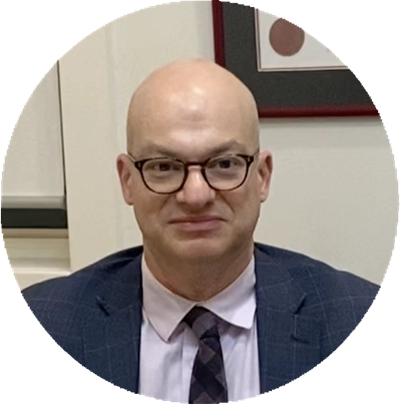
A/Prof Gary Galambos | TMS Plus

OCD can make ordinary life feel like an endless negotiation with an urgent alarm. For someone living with it, and for the people who care about them, understanding what is happening can be the first step towards getting useful help.
We now have two companion educational videos on MindSkiller: Taming the Beast , updated with narration by A/Prof Gary Galambos , and Strengthening the Lion Tamer . Together, they explain his way of understanding OCD and the principles that guide his approach to care.


The first short video explores the demands of OCD and how to practise a different response. The second turns towards the person doing that work: their energy, mood, confidence, relationships and reasons to re-engage with life.
These principles inform Gary’s work within the Uspace inpatient OCD Program at St Vincent’s Private Hospital Sydney and the TMS Plus – VisionTMS outpatient model. MindSkiller supports education, preparation and continuity across the journey.
Why the beast keeps roaring

In the films, the lion or beast represents the urgent demands of OCD. It is a metaphor for a distressing process, never a description of the person experiencing it.
A thought, image, sensation or feeling of incompleteness can trigger an overwhelming urge to do something: check again, wash again, seek reassurance, mentally review an event or get something feeling “just right”. A compulsion may briefly reduce distress. That relief can reinforce the pattern, making the same response more tempting next time.
OCD involves brain processes as well as patterns of learning. Knowing intellectually that a fear seems excessive may do little to quiet its urgency. Understanding the cycle helps us identify where a new response can be practised, with support and without blame.
Learning a different response

Exposure and response prevention, or ERP, is a well-established psychological treatment for OCD. It involves approaching agreed triggers while practising without the compulsions usually used to neutralise distress. Medication can also be part of an individual treatment plan. [1]
The pause described in Taming the Beast can be a useful starting point. Over time, the aim is to reduce and resist compulsions rather than simply postpone a ritual and always perform it later. This includes noticing less visible rituals such as mental checking and repeated requests for reassurance.
The distress curve in the illustration is an example, not a timetable. Anxiety may rise, fall or fluctuate. A practice session can still be useful when you feel uncomfortable: the learning is that you can make room for uncertainty and continue with a chosen action.
Start with a manageable task agreed with your clinician. You do not need to feel fearless before you begin.
When the person doing the training is exhausted

What happens when you understand the training but feel too depleted to participate?
This is the question behind Strengthening the Lion Tamer . Repeated checking, avoidance and mental reviewing can consume time and attention. Some people also experience depression, disrupted sleep, demoralisation or a loss of interest in things that once mattered.
Feeling in “shutdown” describes an experience; it does not establish a single biological explanation. It does tell us that assessment must look beyond the number of rituals. We need to understand mood, functioning, physical health and the obstacles to participation.
Treatment can then address those obstacles alongside OCD. The practical question becomes: what would help this person take their next manageable step?
Three pillars supporting the work

Gary’s framework brings together three areas of care. ERP targets the cycle of obsessions and compulsions through supported practice. Behavioural and emotional activation helps a person reconnect with activity, interest and participation. Reflection and psychoeducation help them understand their experiences, recognise patterns and make informed choices.
These areas overlap. An ERP exercise may also be a step back towards a valued relationship. Learning about OCD may help a family respond more usefully. Addressing depression may make daily practice more achievable.
The three pillars describe how care is organised; they do not imply that every component has the same evidence base. Established OCD treatments remain central, while additional approaches are selected and reviewed according to individual needs.
Turning meaningful experiences into everyday action

“Do more things you enjoy” can feel remote when enjoyment and motivation are hard to access. Personalised material may offer a more concrete starting point.
Within the developing AI-BEAT approach described in the second film, clinicians use AI-assisted video and selected sensory elements to help reconnect a person with meaningful memories, interests and possibilities. A familiar beach, a family gathering or a once absorbing hobby may provide material for that conversation.
The important next step happens beyond the screen. A scene beside the water might lead to planning a short walk. A memory of friendship might lead to sending a message. Activities are chosen and paced collaboratively.
The aim is to support participation. Whether these additional tools improve outcomes, and for whom, requires evaluation; a compelling video is not itself evidence of therapeutic benefit.
Deciding what you want more room for

Reducing the time OCD occupies matters. So does deciding what you want that time to become.
MindSkiller Subunit 1.2 “In Search of Your Life Goals” provides a structure for exploring this. The Valley of Values asks about the directions you want to live by. The House of Healthy Relationships explores the connections you want to nurture. The Garden of Activities considers study, work, interests and ordinary experiences worth returning to or discovering.
Your answers can begin as a few words, photographs or examples. They need not form a perfect life plan. Old interests can offer clues; new ones are welcome too.
For people preparing for personalised activation work, these reflections help the team understand what matters to them. Goals then become practical guides for treatment and everyday choices.
Choosing perspectives and a starting point

The “three minds” illustration describes overlapping capacities, rather than separate anatomical brain parts. Rational thinking can help with useful plans, while recognising when reasoning has become another search for certainty. Emotional awareness helps us notice feelings and sensations without automatically escaping them. Wise reflection brings experience and values into decisions about what to do next.
These capacities also help explain why treatment order varies. Someone whose main obstacle is severe depression or disengagement may need targeted support for those difficulties. Someone whose compulsions are the immediate priority may begin more directly with ERP and other indicated OCD treatment.

We review the response and adjust. Supporting engagement does not mean waiting for perfect motivation or postponing ERP indefinitely.
A personal treatment pathway with regular review

An algorithm is useful when it supports clinical judgement and shared decisions. Here, the starting point is assessment and a conversation about symptoms, previous treatment, functioning, preferences and goals.
If depression or exhaustion is the main barrier, the plan may prioritise depression treatment, with TMS considered when clinically appropriate and personalised activation where suitable. The team then reviews whether more directly focused OCD interventions are needed.
If OCD is the immediate priority, ERP and other indicated OCD treatments may lead the plan. OCD-focused TMS may be considered for selected patients after specialist assessment. Mood and activation needs are reviewed along the way.
Psychoeducation, appropriate ERP practice and outcome review continue across the pathway. Consolidation is planned around progress and ongoing needs. Everyone does not have to complete the same sequence or receive every intervention.
When inpatient support may help

For young people aged 16–25 who need a higher level of support, the Uspace OCD Program at St Vincent’s Private Hospital Sydney offers a specialist inpatient pathway.
The program was developed in conjunction with Professor Vlasios (Bill) Brakoulias and is delivered by a multidisciplinary team. It includes psychiatric assessment, ERP, medication review where appropriate, care for co-existing conditions and family education. Gary’s educational framework contributes to this broader team approach. [2]
Many patients with severe impairment or from outside of Sydney (such as from interstate and rural and remote locations) choose to conduct a preadmission workup with TMS Plus and plan an admission to Uspace that will coincide with their scheduled outpatient multimodal TMS treatment course, which they undertake as an accelerated course over 2-3 weeks and then return for a booster course in about a month's time during a second admission.
Admission depends on individual suitability. A GP or psychiatrist can refer, and the Uspace team assesses whether the program matches the person’s needs. Families can ask about participation requirements, current arrangements and planning for care after discharge.
For enquiries, contact Uspace on 02 8382 9770 or uspace@svha.org.au [2]
Longitudinal outpatient care through TMS Plus and VisionTMS

An outpatient pathway can support treatment while a person remains connected to everyday life. The TMS Plus – VisionTMS model described in the films brings together psychiatric assessment and treatment planning with expertise informed by radiology and neurology.
TMS uses magnetic pulses to stimulate selected brain regions. Its suitability, target and protocol depend on the condition being treated and the individual assessment. Depression-focused and OCD-focused protocols have different purposes; TMS is not automatically indicated for everyone with OCD. [1, 3]
Within the developing multimodal model, selected sessions may incorporate personalised activation material and sensory immersion. These additions sit within a treatment plan that also considers ERP, medication, functioning and ongoing review.
The guiding question is how each intervention contributes to this person’s goals. Technology should serve that plan, with benefits, burdens, costs, uncertainties and alternatives discussed before treatment.
Keeping education and research connected to care

MindSkiller is the mental health utility platform supporting education and connected care across this work. Its role includes helping people prepare for appointments, identify goals and understand their treatment, while supporting shared care and review. [4]
This approach has developed through clinical service innovation in Sydney, including Gary’s work at Uspace and the outpatient TMS Plus–VisionTMS setting. The associated innovation and research work is supported by an HREC-approved research program at St Vincent’s Private Hospital Sydney.
Human Research Ethics Committee approval concerns the ethical conduct of research. It does not establish that a new combination of treatments is effective. The specific package of AI-assisted personalised material, sensory immersion and TMS requires evaluation beyond the evidence for its individual components.
That distinction matters when discussing expectations: clear explanations, informed choices and measurement of meaningful outcomes belong alongside innovation.
Taking a manageable next step

Begin by watching Taming the Beast and Strengthening the Lion Tamer . If it helps, watch with someone you trust and note the parts that resemble your experience or raise questions.
Then consider what OCD has crowded out. MindSkiller’s life goals exercise can help you identify a relationship, value or activity to bring into your treatment conversation. You can bring brief lists and meaningful photographs; there is no need to arrive with everything worked out.
If you are aged 16–25 and considering inpatient care, ask your GP or psychiatrist about referral to Uspace. For outpatient options, contact TMS Plus – VisionTMS to discuss assessment and whether its approach may suit your needs.
The work starts with understanding your situation and choosing an achievable step together. As treatment progresses, the aim is for meaningful life to have more room, even while uncertainty and difficult feelings are present.
These videos and this article provide education. An individual assessment is needed to decide which treatments are appropriate for you.
Sources
[1] National Institute of Mental Health — OCD information
https://www.nimh.nih.gov/health/publications/obsessive-compulsive-disorder-when-unwanted-thoughts-or-repetitive-behaviors-take-over
[2] St Vincent’s Private Hospital Sydney — Uspace OCD Program
https://www.svph.org.au/patient-news/uspace-obsessive-compulsive-disorder-%28ocd%29-program
[3] St Vincent’s Private Hospital Sydney — TMS Treatment at Uspace with VisionTMS
https://www.svph.org.au/patient-news/tms-treatment-at-uspace-with-visiontms
[4] MindSkiller in Practice
https://www.mindskiller.com/mindskiller-in-practice